
Europe has invested heavily in pandemic preparedness. Keeping that capacity alive between crises is the harder task.
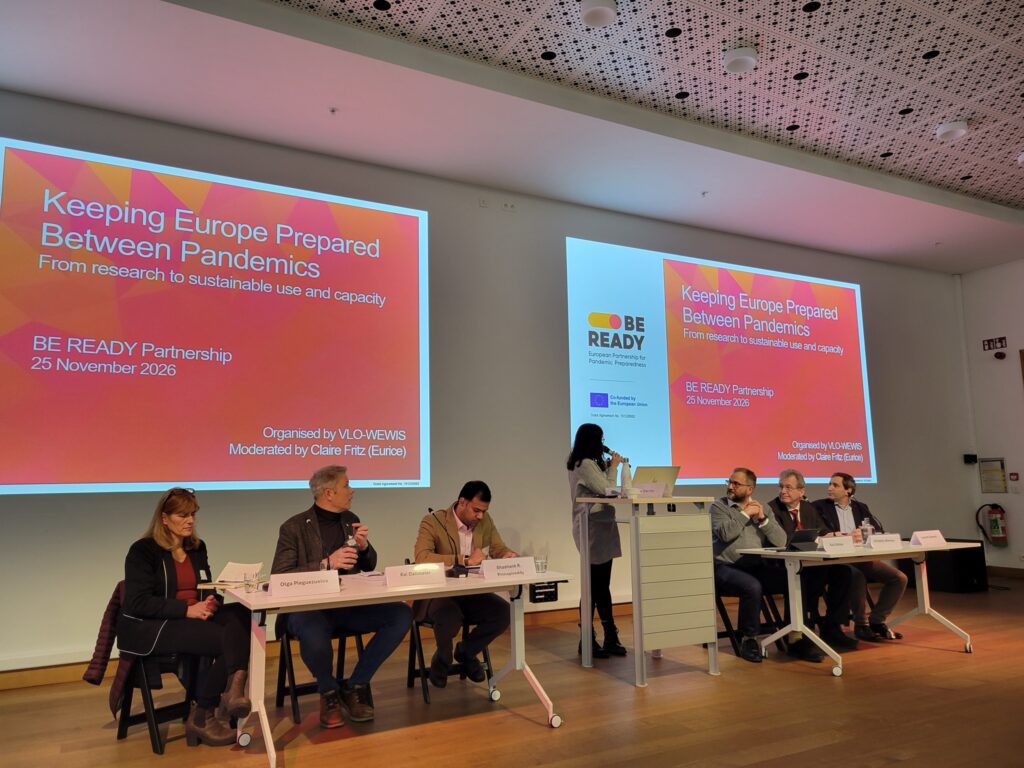
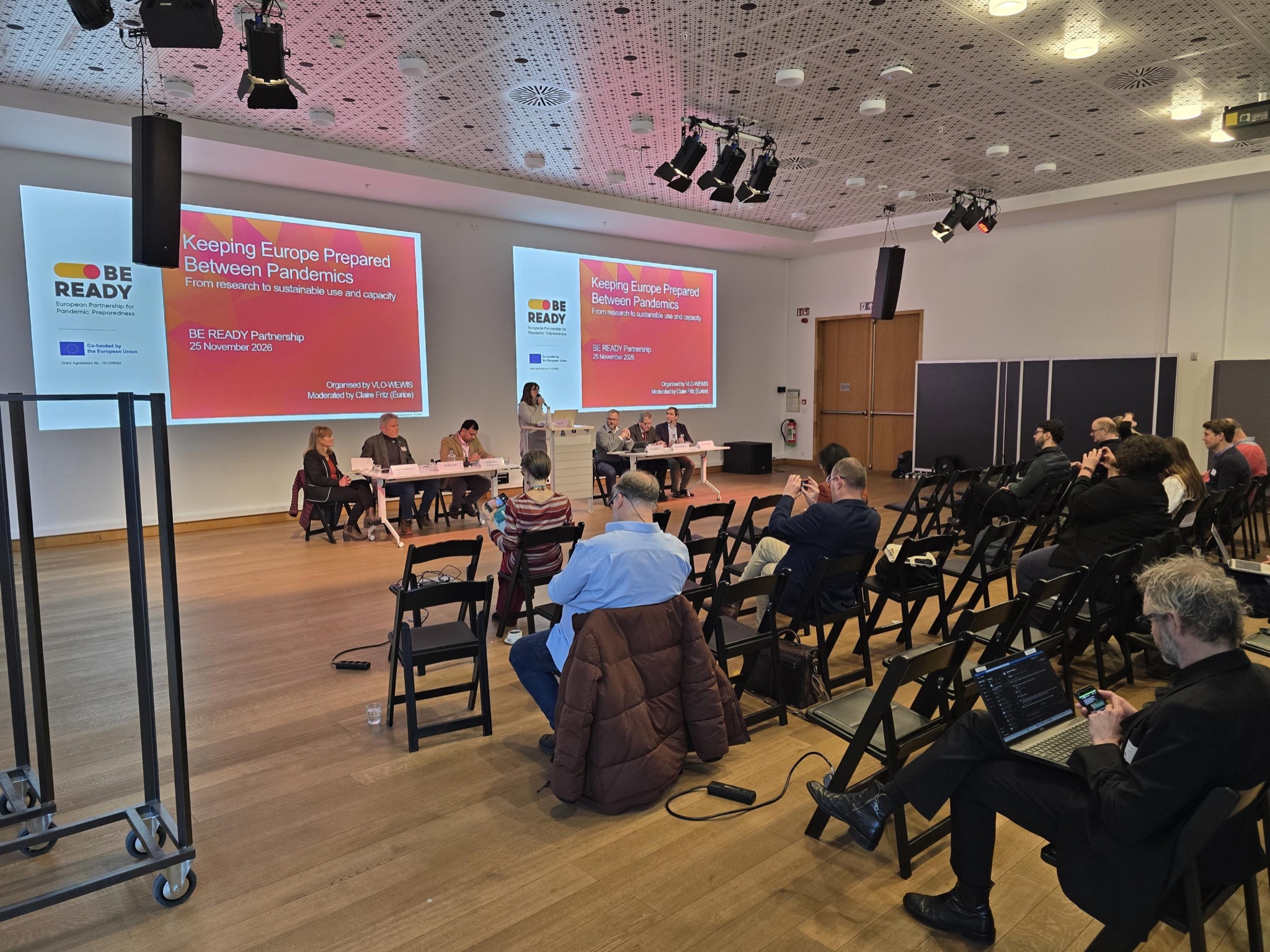
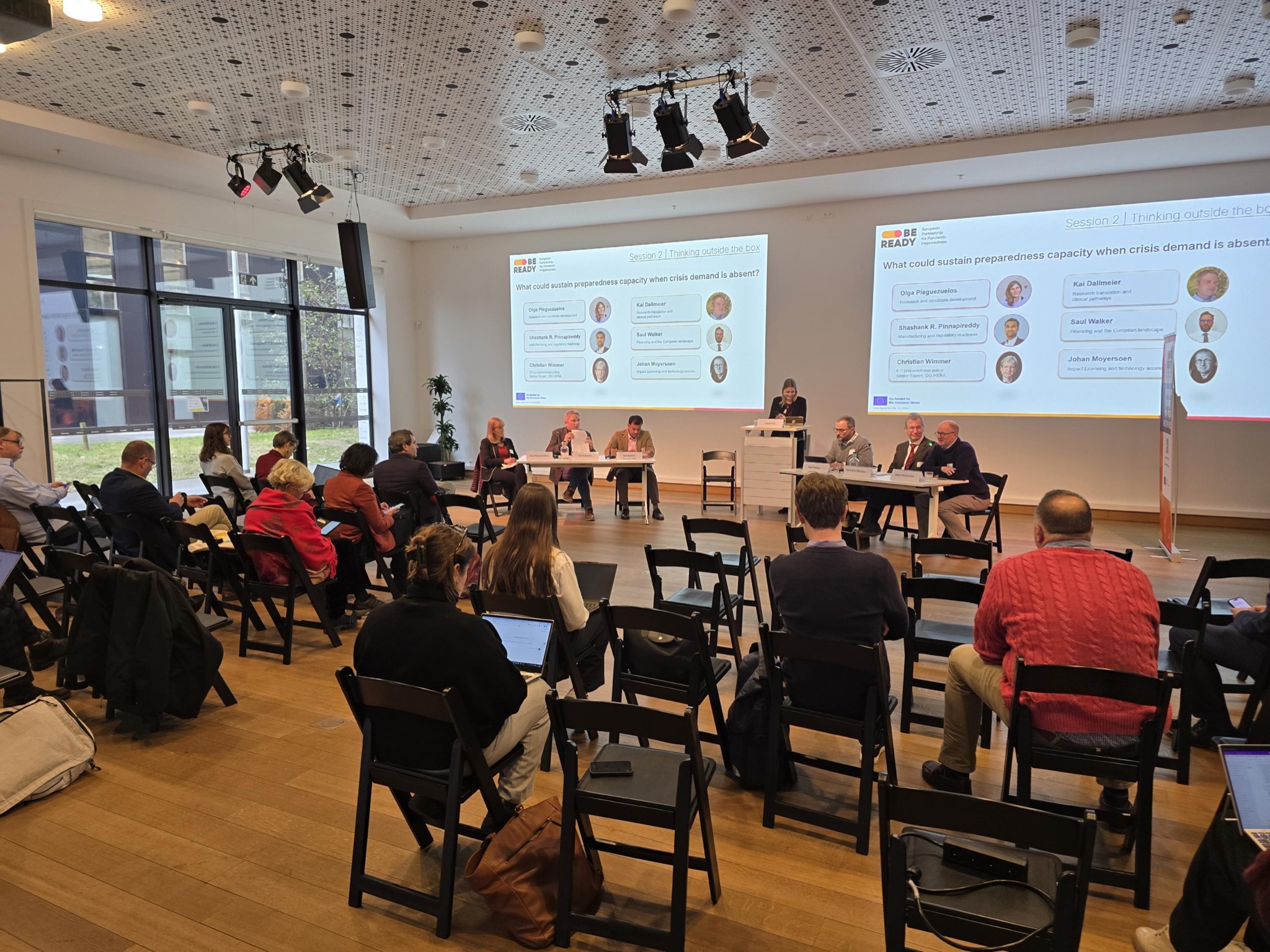
On 25 November 2026, BE READY held its first round table at the Herman Teirlinck Building in Brussels. The event was organized by VLO-WEWIS as part of WP16 (Accelerating translation of research into innovation and policies) and moderated by Claire Fritz (EURICE). It brought together researchers, industry, funders and policymakers, with nearly 50 participants registered.
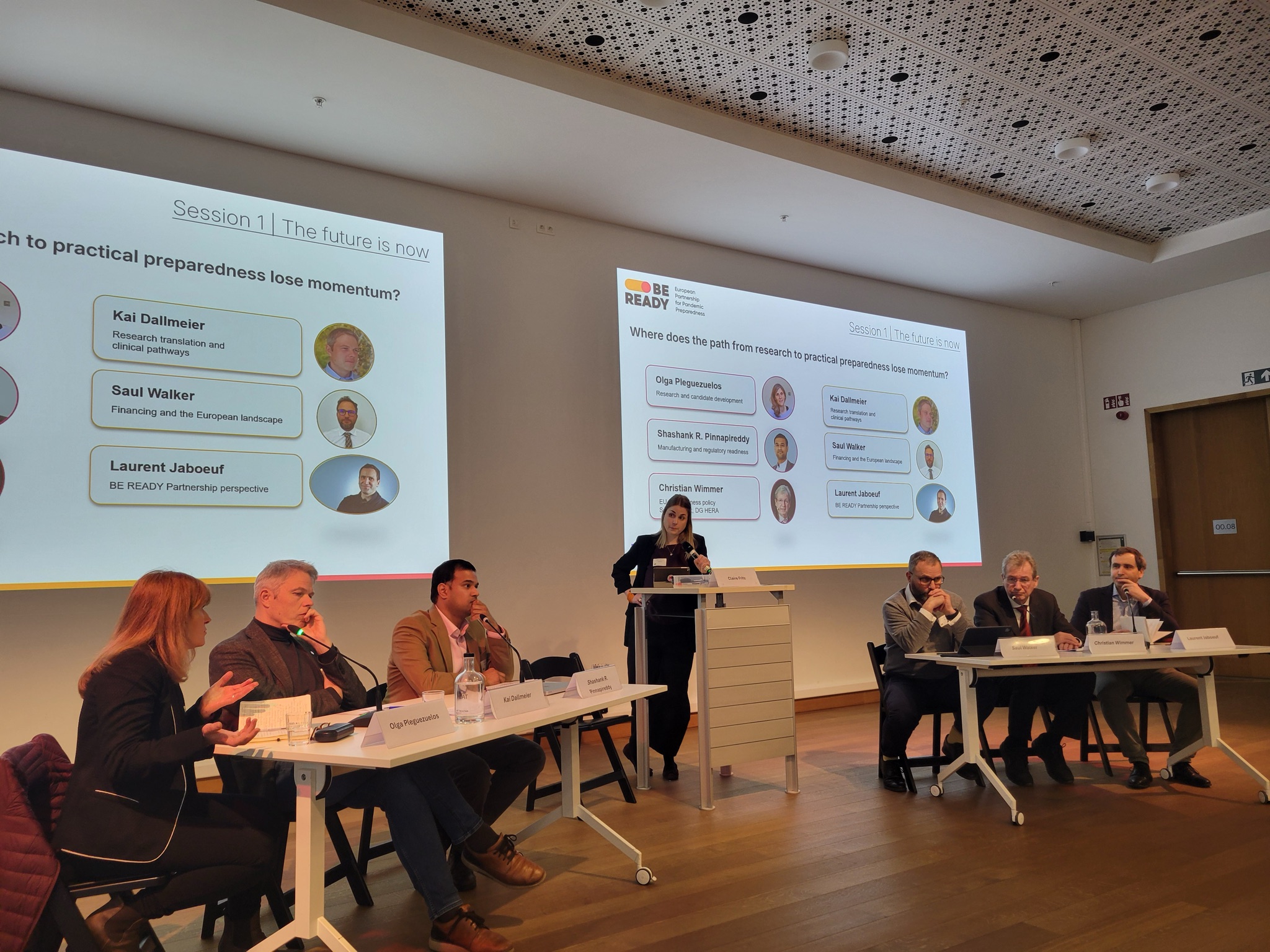
Two sessions framed the discussion. The first asked where the path from research to practical preparedness loses momentum. The second asked what could sustain preparedness capacity when crisis demand is absent.
Define the target product profile early
Promising research often stalls because real-world deployment is considered too late. Defining the target product profile early signals a potential market down the line, which is essential for securing later-stage funding.
Practical research deserves funding too
Research grants tend to favor complex, cutting-edge topics, and practical questions are rarely prioritized. Studying the shelf life of vaccines and face masks is one example: unglamorous work with real impact, because it allows stockpiles to be stored for longer.
People are infrastructure
Experienced teams and specialized manufacturing expertise matter as much as physical facilities. Continuous professional engagement and regular preparedness exercises preserve capabilities that cannot be rebuilt quickly in a crisis.
Shared tools speed up regulatory clearance
Early engagement with regulators is essential to accelerate the development and approval of medical countermeasures. Common assays, reference standards and validated protocols would reduce duplication, ease technology transfer and enable faster, more coordinated responses.
Multipurpose capacity keeps infrastructure viable
Multipurpose facilities combined with predictable government contracts can maintain expertise and operational capacity between pandemics and scale up rapidly in an emergency. Prioritizing technologies that also serve routine healthcare strengthens both economic viability and emergency readiness.
Societal value needs a business model
Panelists highlighted how far the societal value of vaccination exceeds its commercial value. Vaccine development still relies on large pharmaceutical companies taking over at a later stage, which places key decisions in few hands. The discussion raised the question of whether so few actors should shape a system of such public value.
Existing innovations can be unlocked
Impact licensing opens an existing technology for a specific mission outside the license holder’s commercial scope, without undermining its commercial applications. One example discussed was a passive cold-chain solution developed by a Belgian supermarket, which addressed a vaccine transport challenge without the need for a constant energy supply. The technology already existed. Its use case was expanded.
The next EU budget matters
The 2028-2034 Multiannual Financial Framework is a critical opportunity to embed pandemic preparedness within Europe’s long-term research, health and competitiveness priorities. As public attention declines between crises, sustained political advocacy is needed to protect preparedness investment.
What this means for BE READY
Participants saw a concrete role for BE READY in accelerating research translation and valorization: identifying stalled innovations, mapping available expertise and infrastructure, and connecting researchers with development partners. Suggestions included a searchable Observatory, targeted matchmaking, training on valorization and regulatory pathways, and practical coordination exercises. Together, these would help turn fragmented research capacity into a connected innovation ecosystem.
Explore the BE READY Observatory and meet the speakers.
BE READY thanks moderator Claire Fritz and panelists Olga Pleguezuelos, Kai Dallmeier, Shashank R. Pinnapireddy, Saul Walker, Christian Wimmer, Laurent Jaboeuf and Johan Moyersoen, all participants for their questions and contributions, and Departement WEWIS for hosting.